
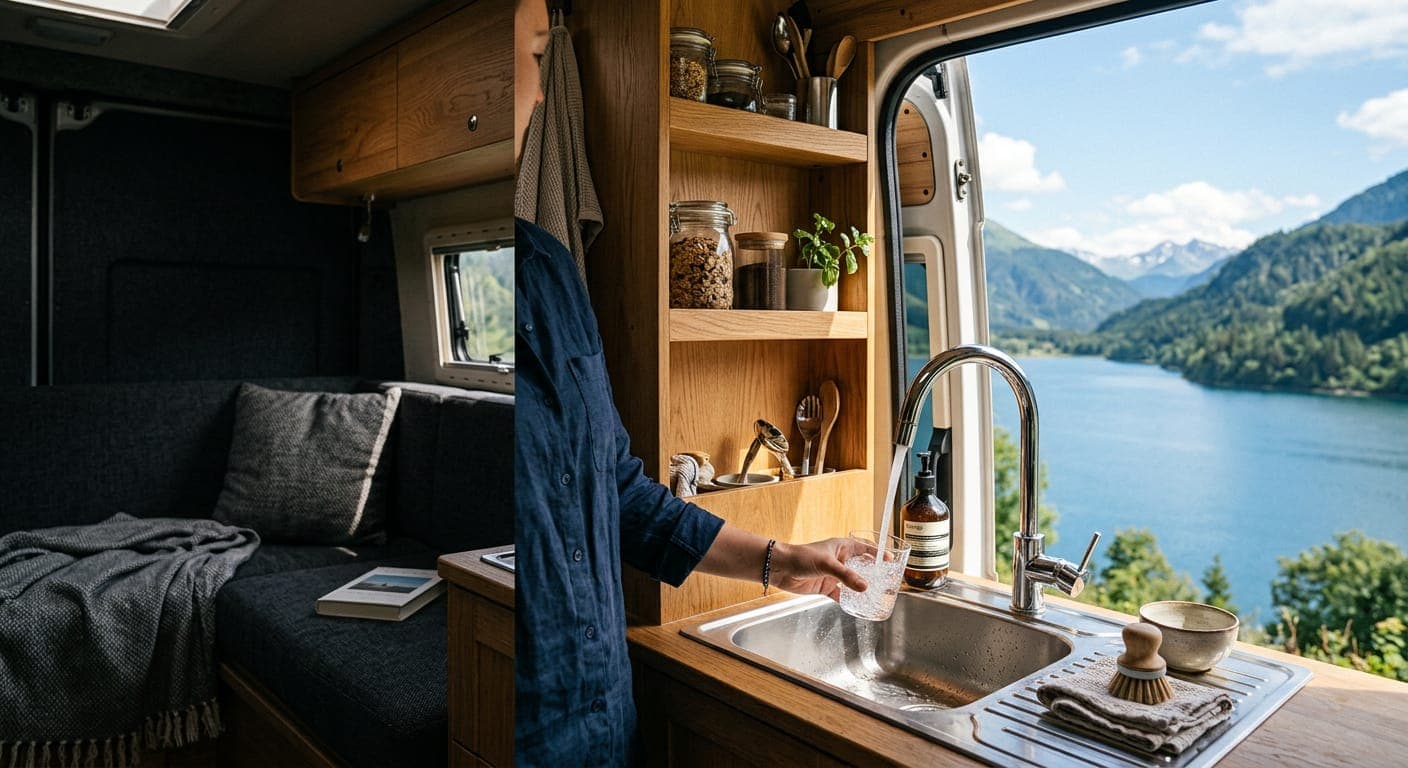
Campervan Water: The Pros and Cons
Portable containers and fitted tanks both keep you supplied on the road, but in different ways. Here is what you gain and what you give up with each.
Carry it or plumb it?
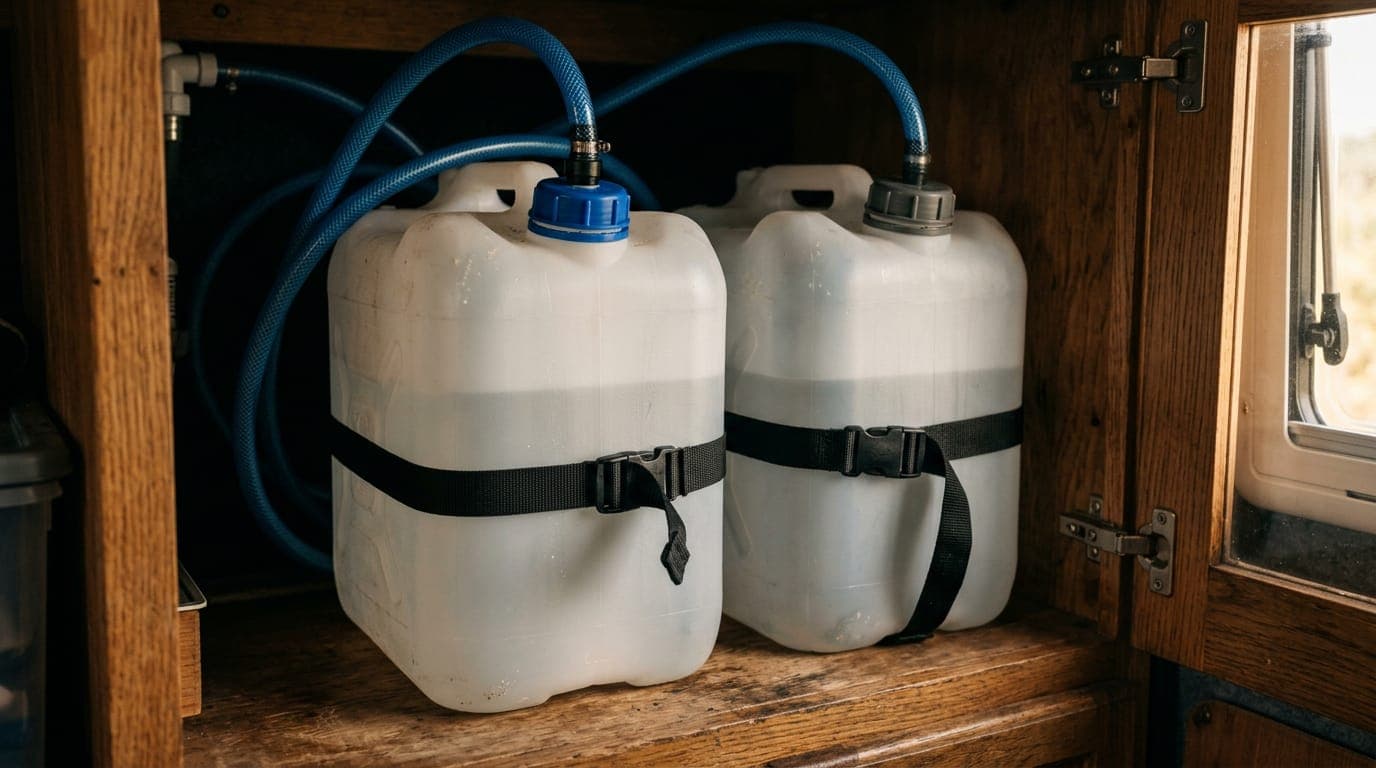
Simple and removable
Portable containers
Containers you carry in, fill up and take out to clean.
Pros
Simple and low cost. Easy to buy, easy to replace and nothing complicated to go wrong.
Easy to clean. Lift them out, rinse them through and check them properly between trips.
Fill them anywhere. Carry them to the tap, so you do not need to park next to a water point.
Nothing to freeze. No fitted pipework or pump to drain down before cold-weather trips.
Cons
Heavy to carry. A full 20 L container weighs around 20 kg, so choose a size you can lift comfortably.
More frequent refills. Smaller capacity means planning stops more often on longer trips.
Uses cupboard space. Containers take up room inside the van that could be used for storage.
Must be secured. Full containers need strapping down so they cannot move while you drive.
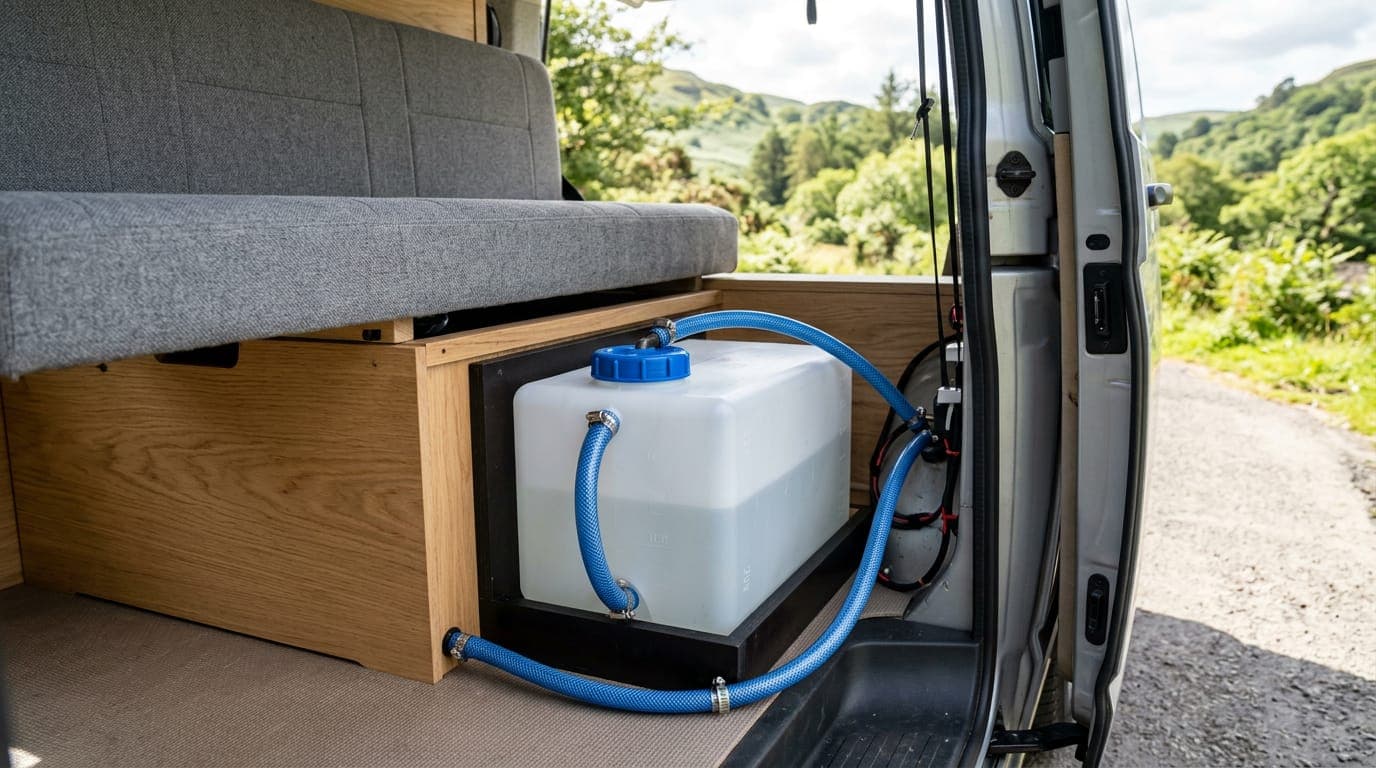
Water on tap
Fitted water tank
A built-in tank with a pump and plumbing to your sink.
Pros
Water on tap. Turn the tap and water flows, which makes everyday cooking and washing easier.
Larger capacity. Carry more water for longer stays away from facilities.
No lifting. Fill it with a hose or watering can rather than carrying heavy containers.
Out of the way. Sits under a seat, in a cupboard or underneath the van, freeing up space.
Cons
Extra weight. Every litre adds a kilogram, so a full tank eats into your payload.
More to maintain. The tank, pipes, pump and taps all need regular cleaning to stay fresh.
Needs a drain-down plan. Pipes and pumps can be damaged by frost unless the system is drained properly.
Harder to access. Check you can reach the tank to inspect, clean and drain it without stripping the van.
Whichever you choose
- Plan where your grey water goes. Everything you use at the sink has to be collected and emptied.
- Use a known drinking-water supply and a clean, food-grade hose or container to fill up.
- You do not need to carry a full tank every journey. Fill to match your next refill stop.
Always follow the cleaning and drain-down instructions for your specific water system.
Watch or listen
Campervan water: fresh, grey and waste water, containers or a fitted tank, and how much you really need.
My experience
What managing water is actually like on the road, from refill stops to emptying the grey water.
Read my experience