
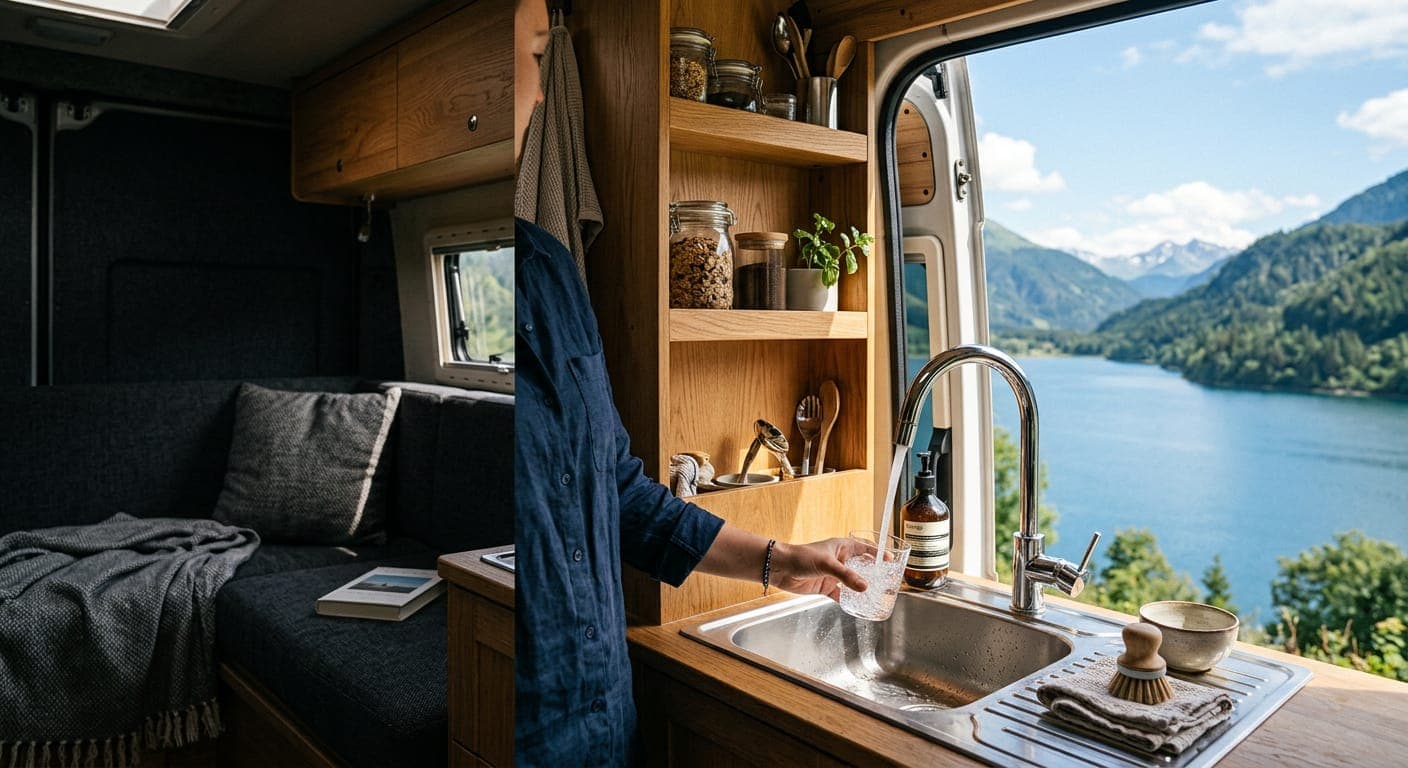
Water for Your Campervan
How much do you need?
From a simple water container to a fitted tank, choose a setup that suits how you cook, wash and travel.
Fresh water.
More freedom.
Campervan water: the quick answer
Keep it simple…
removable containers can suit short trips and regular access to campsite facilities.
Choose a fitted tank…
for convenient water on tap. Plan access for filling, cleaning and draining.
But…
more capacity adds weight. Your refill stops and waste-water storage matter too.
Which water setup suits you?
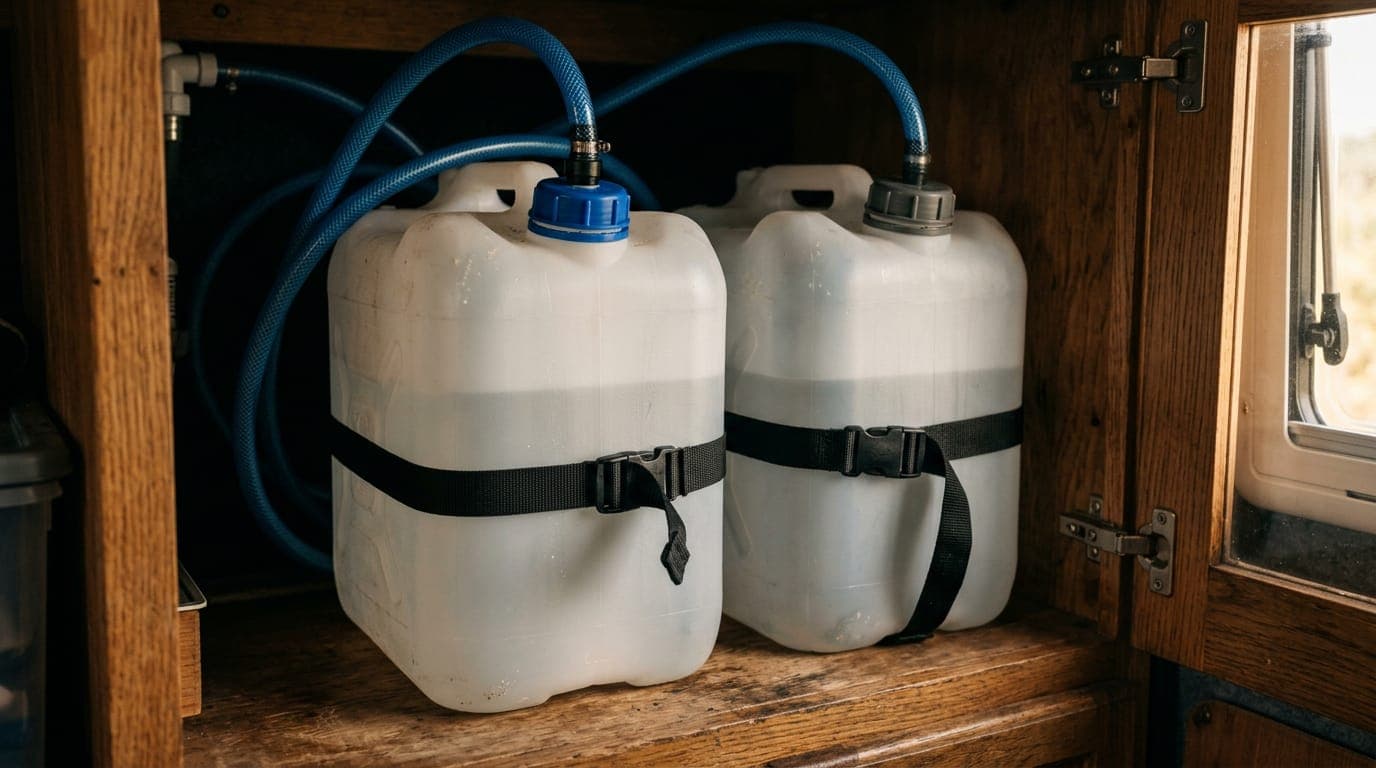
Portable containers
Easy to remove, fill and clean. Choose a size you can comfortably lift.
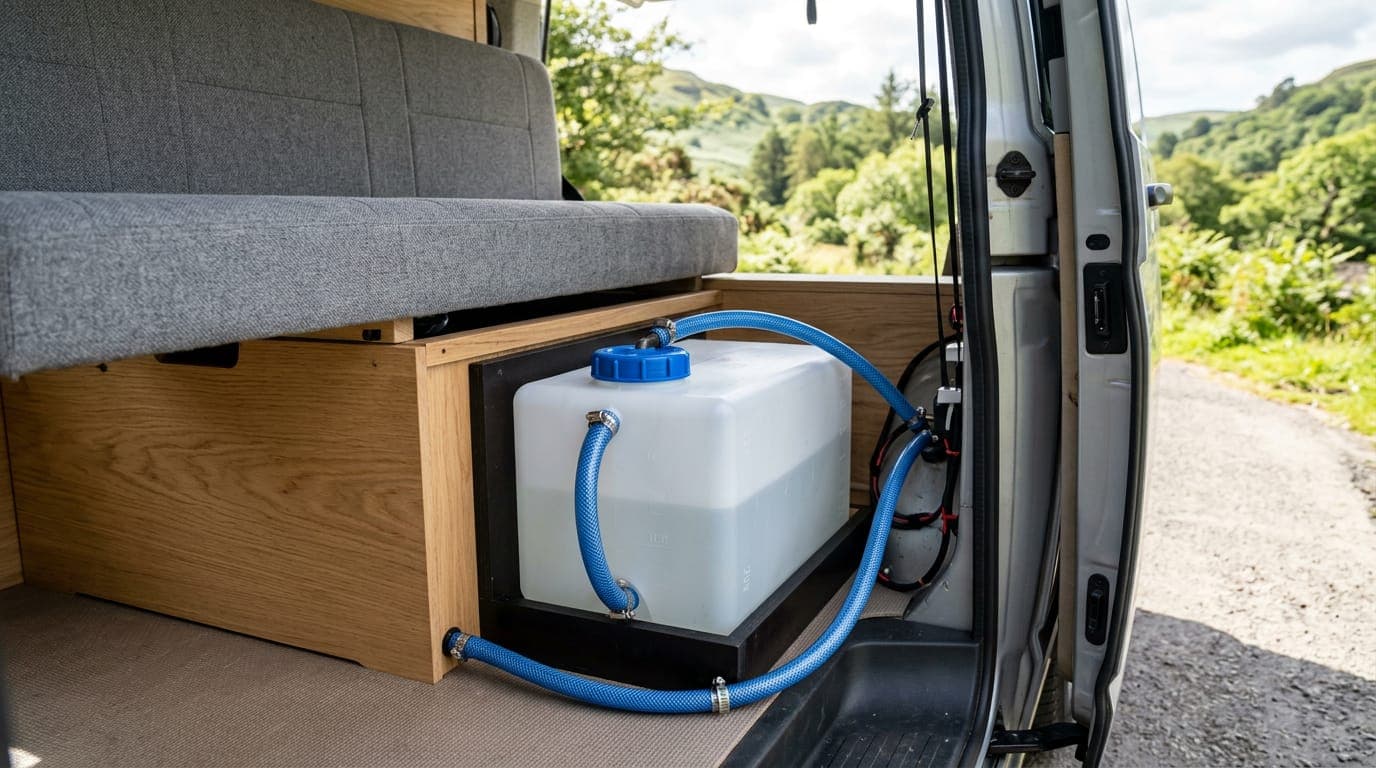
Fitted water tank
Convenient water on tap, with a pump and plumbing. Check tank access and installation.
Where will your water go?
Think about storage space, cleaning access and cold-weather trips.
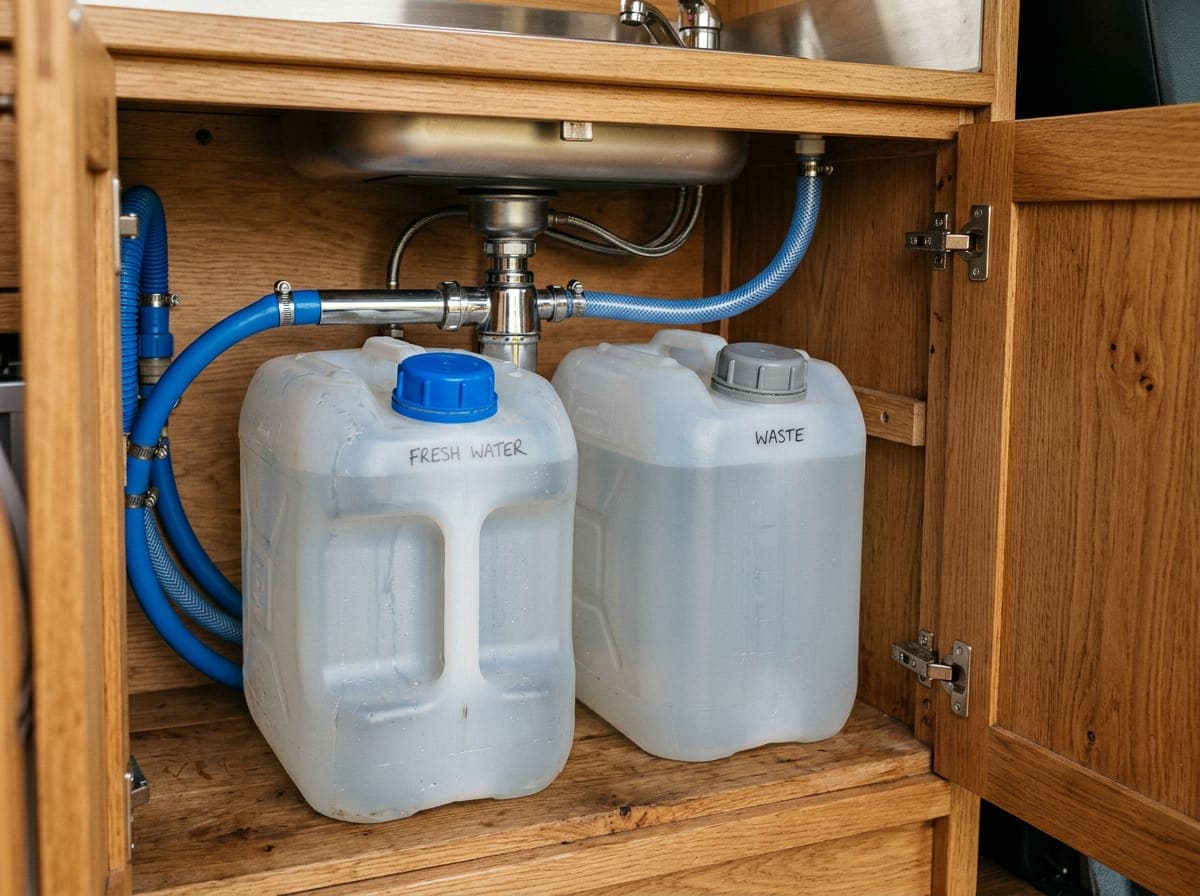
Removable containers
Easy to inspect and carry. Keep fresh and waste containers separate.
Check: lifting and access
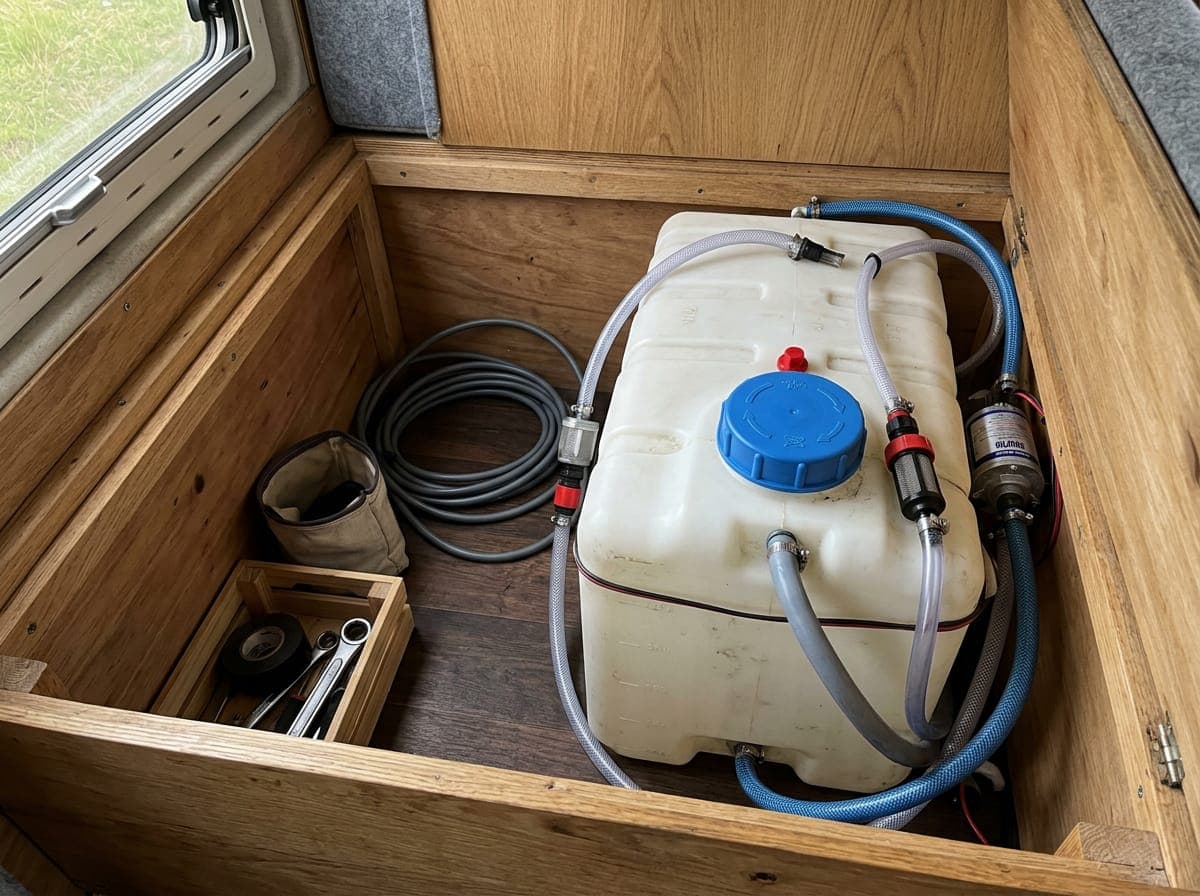
Internal tank
Uses cupboard or under-seat space. Inside does not guarantee frost protection.
Check: usable storage
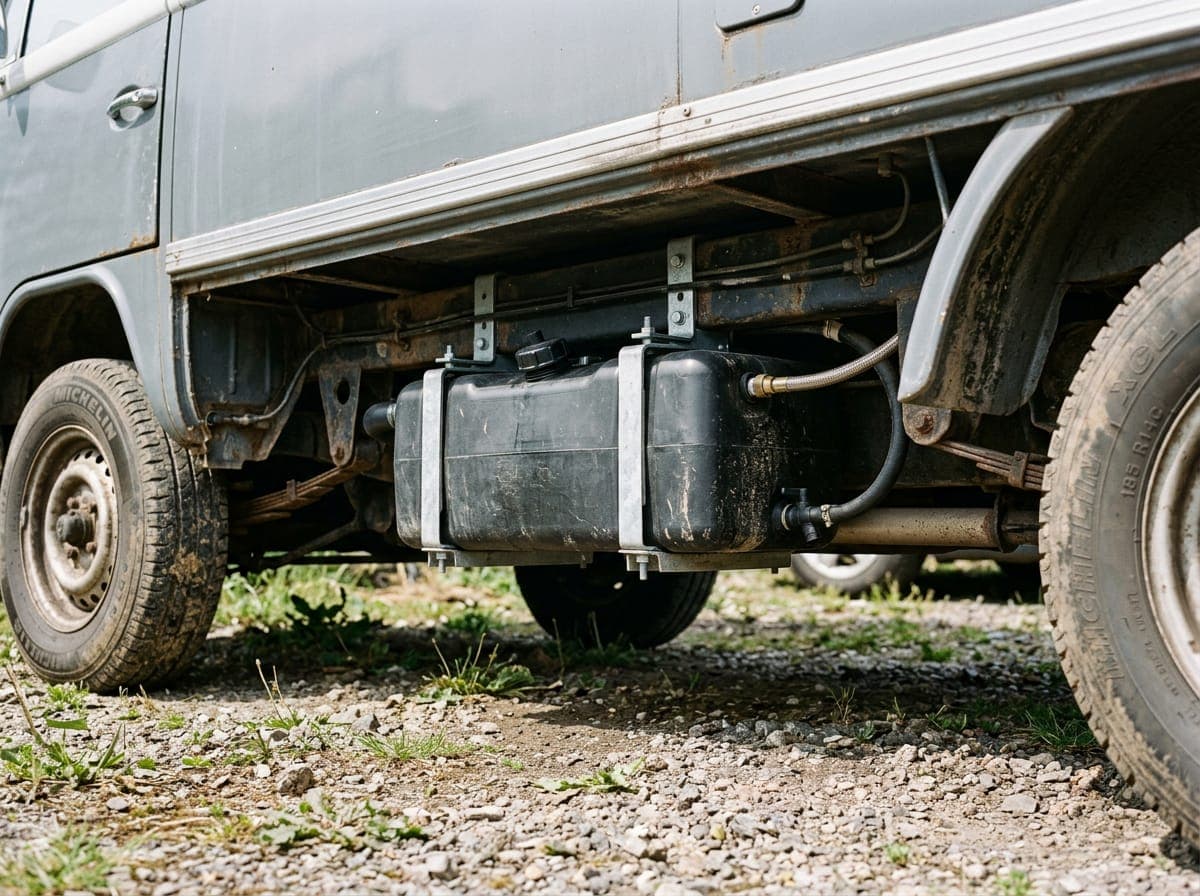
Underslung tank
Frees up interior space. Check ground clearance, frost protection and drain access.
Check: cold-weather plan
What might you use each day?
An illustrative budget for two people — not a recommended drinking allowance.
| Use | Example water |
|---|---|
| Drinking & hot drinks | 6 L |
| Cooking | 2 L |
| Washing up | 4 L |
| Hands & basic washing | 4 L |
| Example total | 16 L/day |
Put that into perspective
At 16 L a day, two days need 32 L before a reserve. Showers and toilet flushing are extra.
These are planning assumptions, not measured averages. Weather, activity and habits change demand. Measure your own use.
Capacity comes with weight
Water weighs approximately 1 kg per litre.
| Water carried | Water weight |
|---|---|
| 20 L | 20 kg |
| 50 L | 50 kg |
| 80 L | 80 kg |
Plan your next refill
Match capacity to your route and available payload. Include tanks, fittings and any waste water carried.
Check the vehicle's loaded weight and axle limits. A bigger tank does not need to be full for every journey.
Fresh in. Waste out.
Fill thoughtfully
Use a known drinking-water supply and clean food-grade hose or containers.
Keep it clean
Follow your system's cleaning instructions. Include tanks, hoses and taps; maintain filters as specified.
Empty responsibly
Collect sink and shower water as grey water. Use designated disposal points; toilet waste needs its own facility.
Cold-weather trips: follow the manufacturer's drain-down instructions to protect tanks, pipes, pump and water heater.
The pros and cons
Capacity, convenience, weight and maintenance — the trade-offs explained.
Explore the trade-offsMy experience
A space for my own water setup and what I have learnt on the road.
Read my experienceThe Campervan Considered view
Start with your travel habits and refill opportunities, then choose the simplest setup that works for you.
Find your fitThe pros and cons of each water setup
Portable containers
- Benefit:Simple, low cost and easy to replace
- Benefit:Easy to take out, fill and clean
- Benefit:No plumbing or frost-sensitive pipework
- Trade-off:Heavy to carry when full
- Trade-off:Smaller capacity means more frequent refills
- Trade-off:Takes up cupboard space inside the van
Fitted water tank
- Benefit:Water on tap with a pump
- Benefit:Larger capacity for longer stays
- Benefit:Can be filled with a hose without lifting
- Trade-off:More weight carried when full
- Trade-off:Tanks, pipes and pump need cleaning and maintenance
- Trade-off:Needs a drain-down plan for cold weather
My experience
My own water setup and what I've learnt on the road will appear here soon.
Personal story to add
The Campervan Considered view
Start with your travel habits and refill opportunities, then choose the simplest setup that works for you.
If you mostly stay on campsites, removable containers are often all you need — easy to fill, easy to clean and nothing to freeze. If you spend more nights away from facilities, a fitted tank with a pump makes everyday life easier.
Either way, remember that every litre adds a kilogram, and that what goes in must come out: plan where your grey water goes too.
Watch or listen
The water discussion will appear here when available.
Water episode — coming soon
Sources & specifications
Water-system care, waste disposal and the assumptions behind our examples.
Always follow the cleaning and drain-down instructions for your specific water system.
Next guide
Using water on board? Next, consider whether a shower belongs in your layout.
Considering a shower