
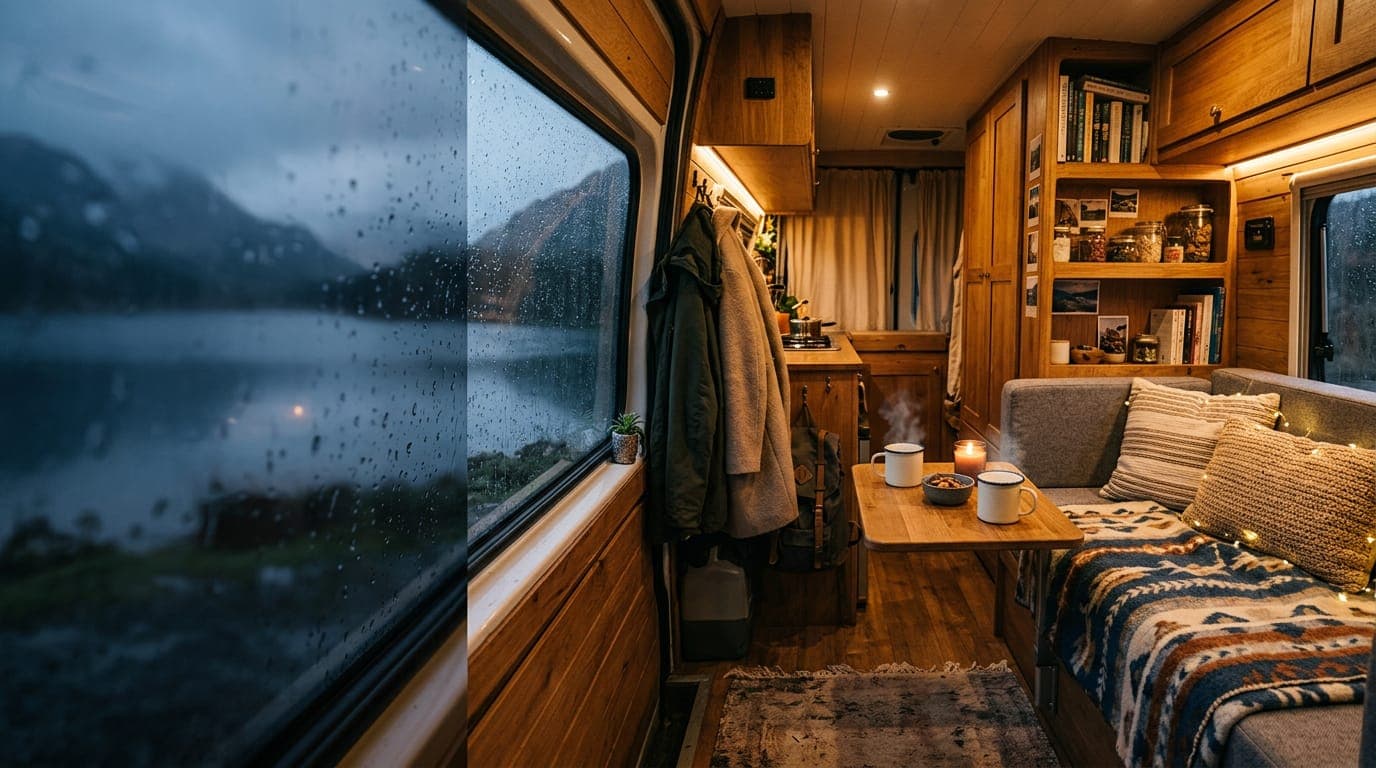
Campervan Heating: The Pros and Cons
Diesel, gas and electric heating can all keep you warm, but they ask different things of your fuel, battery and pitch. Here is what you gain and what you give up with each.
Warm, but at what cost?
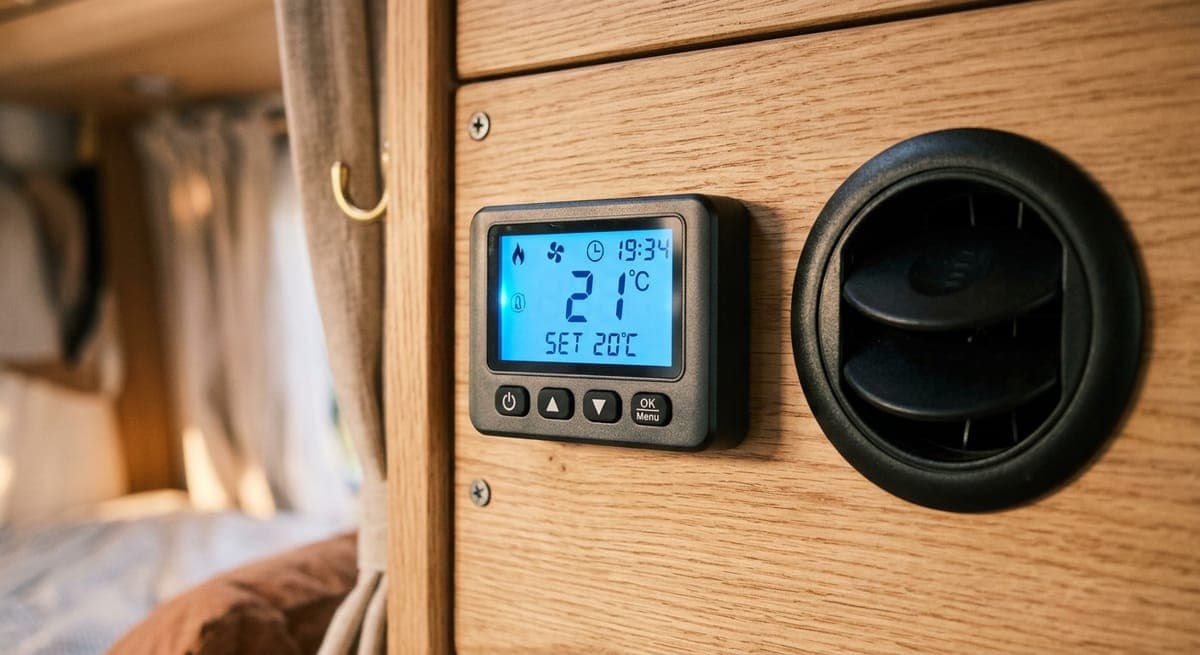 What we use
Fuel from the van
Diesel heating
Warm, dry heat away from hook-up.
Pros
Works off-grid. Keeps you warm without a hook-up, so it suits wild spots and quieter sites.
Shares the vehicle tank. Many systems draw from the van’s own fuel, so there is nothing extra to carry.
Quick, dry heat. Warm air heats a small van fast and helps keep the air feeling dry.
Cons
Needs battery power. The fan, pump and controls all draw from the leisure battery.
Noise to consider. The pump tick and fan hum are noticeable to some people at night.
Regular use and servicing. Running it occasionally and servicing it helps keep it reliable.
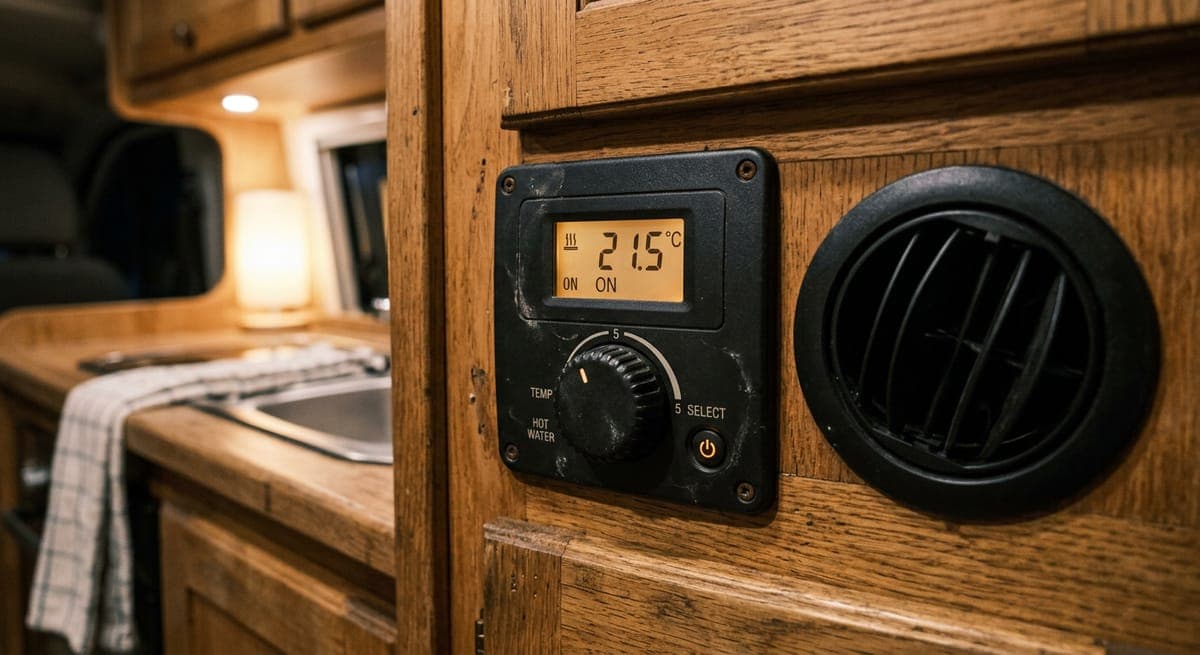
Bottled or refillable gas
Gas heating
Often combined with hot water.
Pros
Works off-grid. Heats the van without needing an electric hook-up.
Heating and hot water. Some systems provide both from one appliance.
Generally quiet. Often quieter in use than fan-driven alternatives.
Cons
Gas to manage. Bottles to carry, store, swap or refill, and use to keep an eye on.
Often still needs 12V. Many systems need electricity for ignition, controls and fans.
Qualified fitting and checks. Installation and regular safety checks must be done by someone qualified.
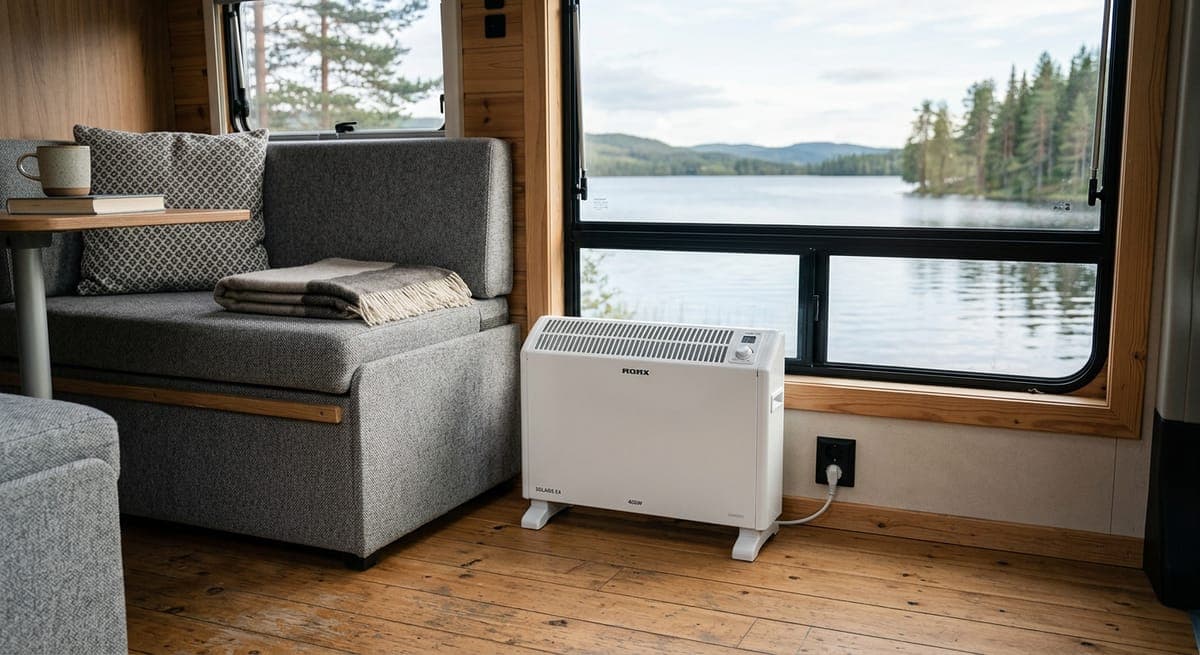
On hook-up
Electric heating
Simple warmth when the supply allows.
Pros
Simple to use. Plug in on a suitable pitch supply and switch on.
No fuel to carry. Nothing to refill, and no combustion inside the van.
Portable options. A small heater can be added without major installation work.
Cons
Limited by the pitch supply. Hook-up limits can be low, and an overloaded supply will trip.
Not for battery-only nights. Electric space heating places a very large demand on stored energy.
Shares the supply. It competes with the kettle, water heater and chargers.
Whichever you choose
- Start with when and where you travel, then choose the heating that fits those trips.
- Plan your battery as well as your fuel. Most fitted heaters need 12V power to run.
- Have fuel-burning heaters fitted and serviced by someone qualified, and fit a carbon monoxide alarm.
We use a diesel heater in our van. Some vans combine a fitted fuel heater for off-grid nights with a small electric heater for campsites. Always follow the instructions for your exact appliance.
Watch or listen
Campervan heating: diesel, gas or electric, and how to stay comfortable in the cold and the heat.