
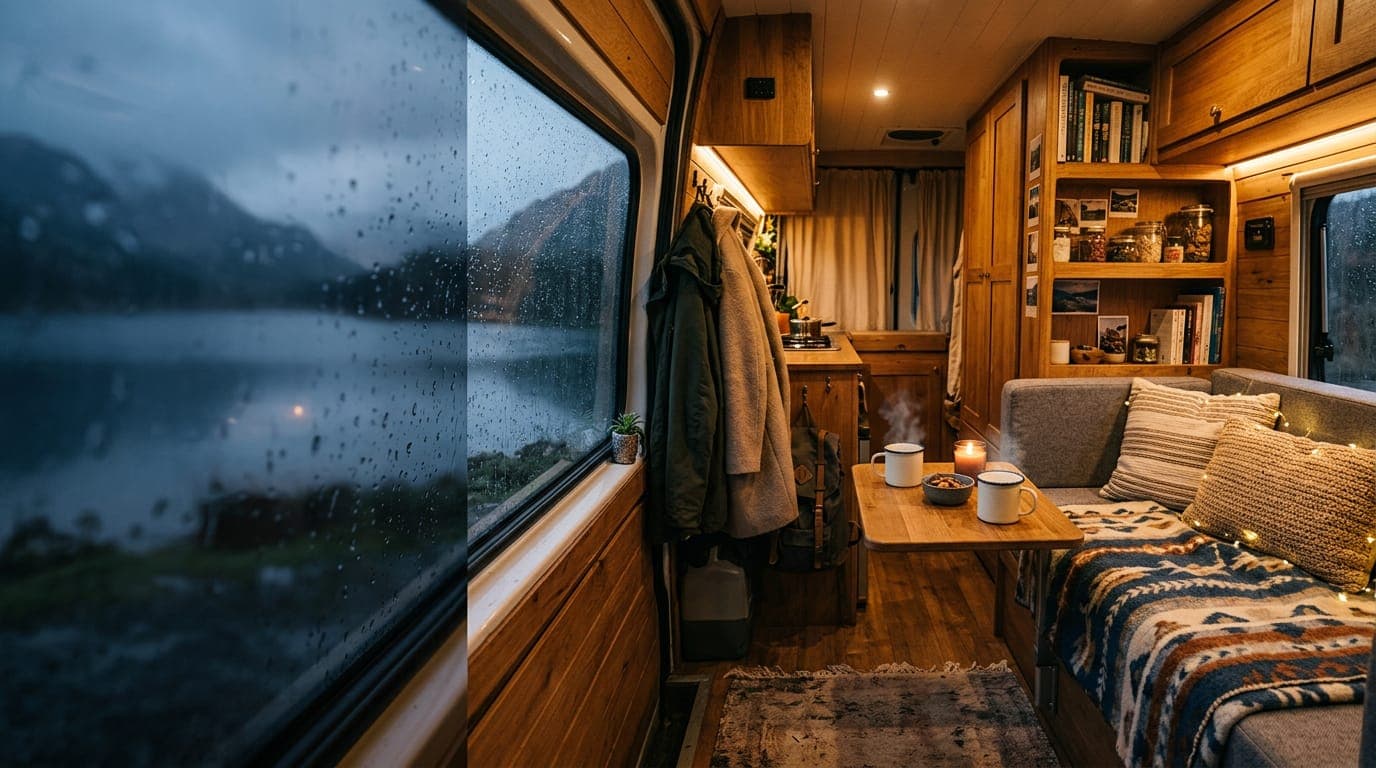
Heating for Your Campervan
Warmth that works for your travels.
Cold evenings, damp clothes and chilly mornings — choose heating around how and when you use your van.
More comfort.
More seasons.
Campervan heating: the quick answer
Away from hook-up…
consider a suitable fitted fuel heater, and plan both fuel and electrical demand.
On a campsite…
electric heating may be useful when the supply and appliance are suitable.
But…
insulation, ventilation, noise and installation matter as much as the heat output.
Step 01: Which heating setup suits you?
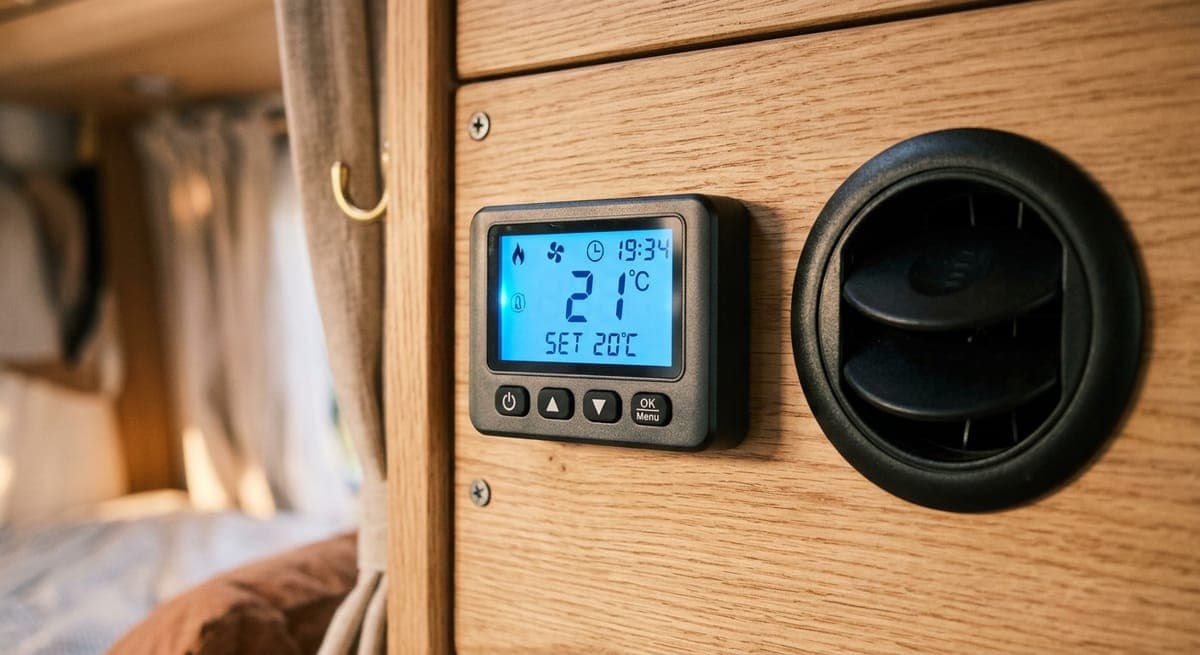
Diesel heating
Uses diesel for heat, with electricity for controls and operation. Check noise, fuel supply and servicing.
Consider: fuel and battery
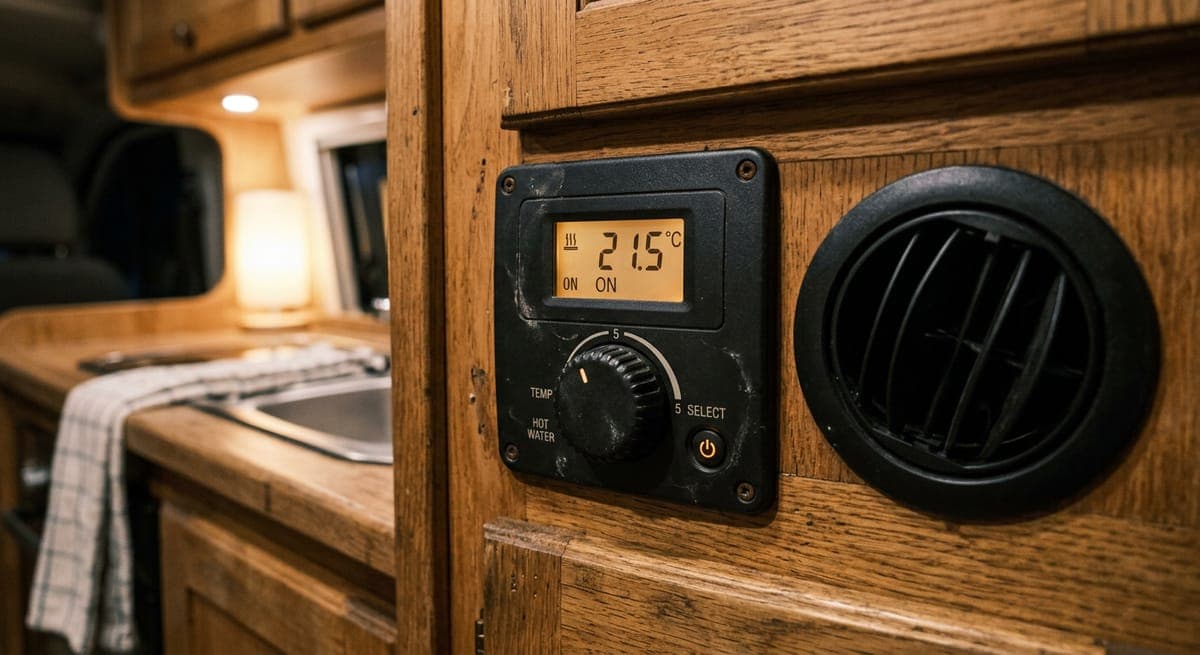
Gas heating
Uses gas for heat. Many systems also need 12V power; some models offer electric operation.
Consider: gas supply
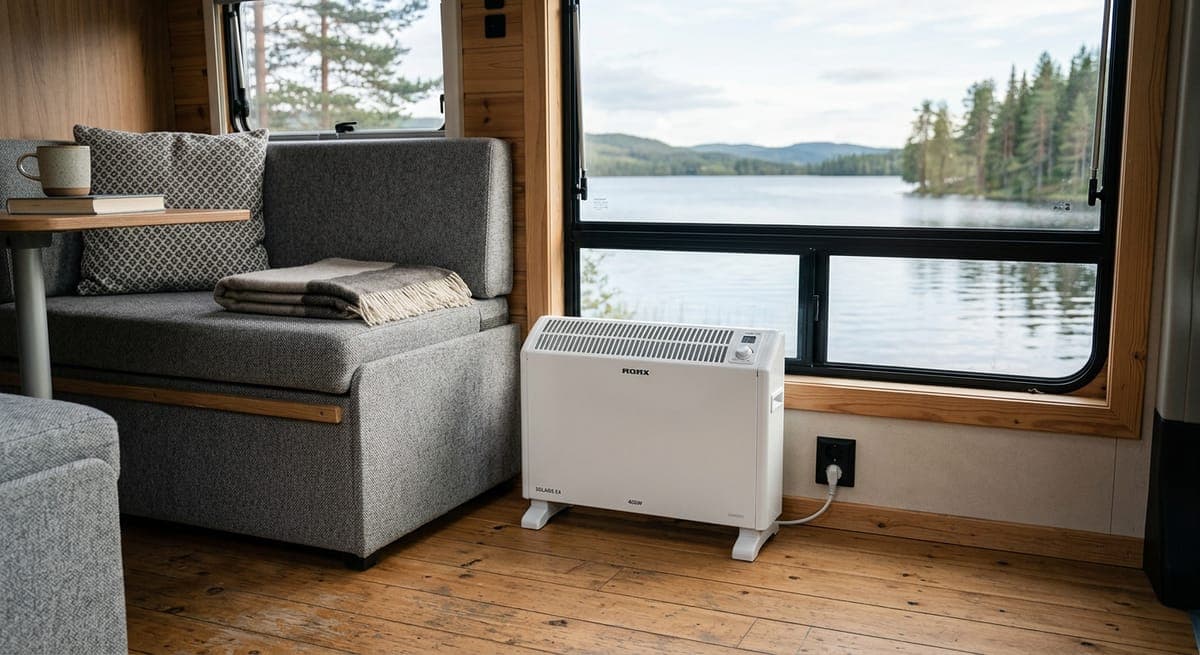
Electric heating
Useful with a suitable mains supply. Check hook-up limits and the load from other appliances.
Consider: available mains power
Some fitted systems combine space heating and hot water. Check exactly what the model provides.
Step 02: Warmth is more than a heater
Keep heat in
Insulation and suitable window coverings can help. Keep required ventilation clear.
Let air circulate
Keep heater outlets unobstructed and follow ventilation instructions. Heating alone does not remove moisture.
Make it comfortable
Check warm-air distribution, controls and noise where you sleep. Plan somewhere for wet kit.
Step 03: What does electric heat ask of your supply?
Illustrative arithmetic at 230V — not appliance recommendations.
| Heater input | Approx. current |
|---|---|
| 500 W | 2.2 A |
| 1,000 W | 4.3 A |
| 2,000 W | 8.7 A |
Add up the whole van
A heater shares the supply with your kettle, water heater, chargers and other appliances.
Current = watts ÷ 230V. Check the pitch limit and appliance instructions. Battery-powered electric space heating can place a very large demand on stored energy.
Step 04: What should you check?
Your trips — season, temperatures and time away
Fuel & power — supply, charging and running demand
Comfort — noise, controls and heat distribution
Installation — qualified fitting and suitable components
Care — servicing and access to the equipment
Try a cold evening
Run the fitted heater as instructed. Check comfort in the seating and sleeping areas, and listen to it at night.
Heat output is not electrical consumption. Use the exact model's specifications when planning your battery.
Step 05: Use heating safely
Use the right appliance
Never use a cooker, barbecue or portable fuel-burning camping appliance to heat the van.
Keep it clear
Follow instructions for vents, flues and clearances. Never cover the heater or its outlets.
Maintain and monitor
Arrange appropriate installation and servicing. Fit and test a suitable carbon monoxide alarm.
Choose heating for the cold, damp evening — not just the sunny showroom visit.
Step 06: Explore next
The pros and cons
Fuel, power, noise and maintenance — the trade-offs explained.
Explore the trade-offsMy experience
A space for my own heating story and what I have learnt on colder trips.
Personal story to add
Your cold-weather routine
Think about warming up, sleeping comfortably and drying wet kit.
Plan your routineWatch or listen
The heating discussion will appear here when available.
Heating episode — coming soon
Sources & specifications
Manufacturer guidance and the assumptions behind our examples.
- Truma heating(opens in a new tab)
- Webasto comfort heating(opens in a new tab)
- Caravan and Motorhome Club(opens in a new tab)
Always follow the installation and servicing instructions for your exact heater.
Next guide
Most heaters need electricity as well as fuel. Find out how your van's power and electrics can keep you warm away from hook-up.
Power & ElectricsThe pros and cons of each heating setup
Diesel heating
- Benefit:Works away from hook-up
- Benefit:Can draw from the vehicle fuel tank
- Benefit:Quick, dry warm-air heat
- Trade-off:Needs battery power to run
- Trade-off:Fan and pump noise to consider
- Trade-off:Needs regular use and servicing
Gas heating
- Benefit:Works away from hook-up
- Benefit:Often combined with hot water
- Benefit:Generally quiet in use
- Trade-off:Gas bottles to carry and refill
- Trade-off:Many systems still need 12V
- Trade-off:Installation and checks by a qualified fitter
Electric heating
- Benefit:Simple to use on hook-up
- Benefit:No fuel to carry
- Benefit:Portable options available
- Trade-off:Limited by the pitch supply
- Trade-off:Unsuitable for battery-only nights
- Trade-off:Shares the supply with other appliances
Your cold-weather routine
- 1Warm the van before you settle in for the evening.
- 2Ventilate while cooking and drying kit to keep condensation down.
- 3Set the heater for sleeping comfort and check it is quiet enough.
- 4Keep wet coats and boots away from heater outlets.
- 5Check your fuel, gas and battery levels before bed.