
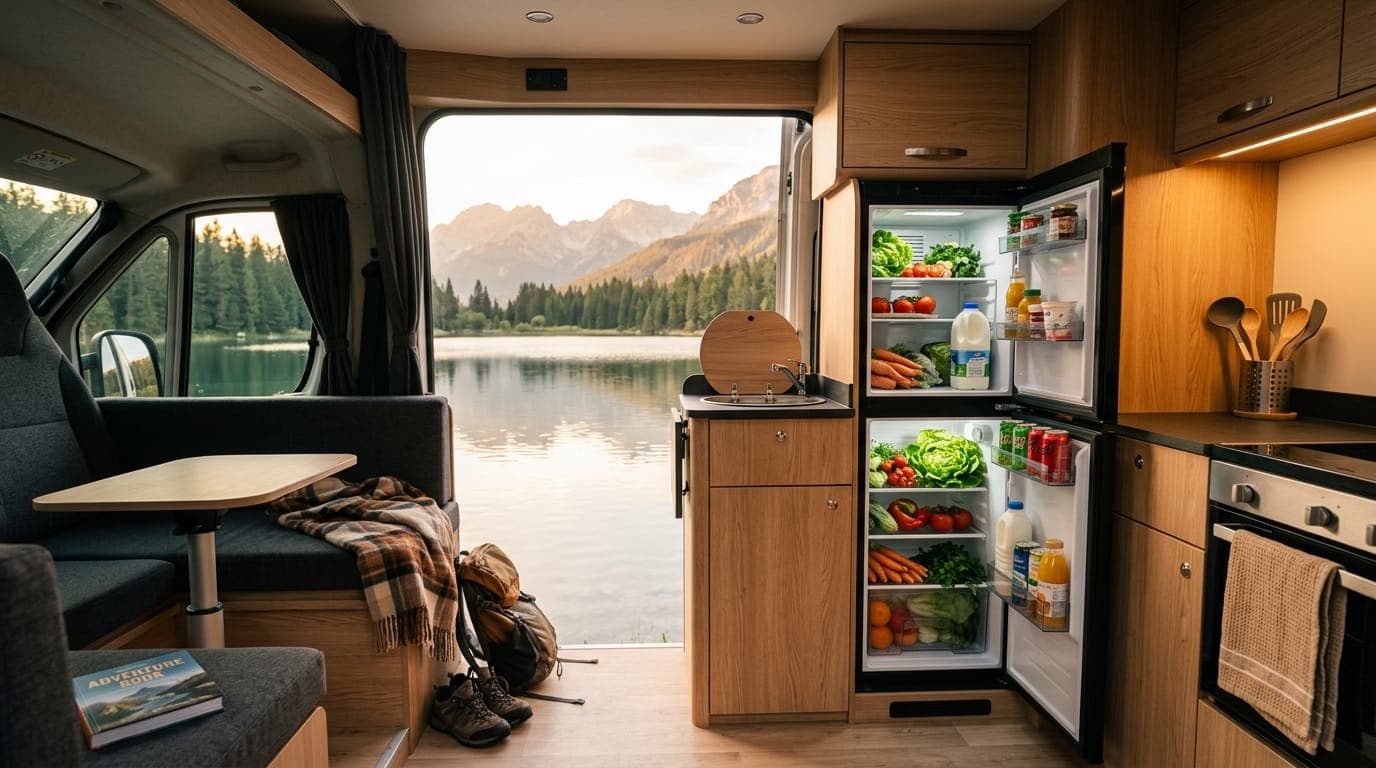
Campervan Fridges: The Pros and Cons
Compressor and three-way fridges both keep food fresh on the road, but in different ways. Here is what you gain and what you give up with each.
Battery or gas?
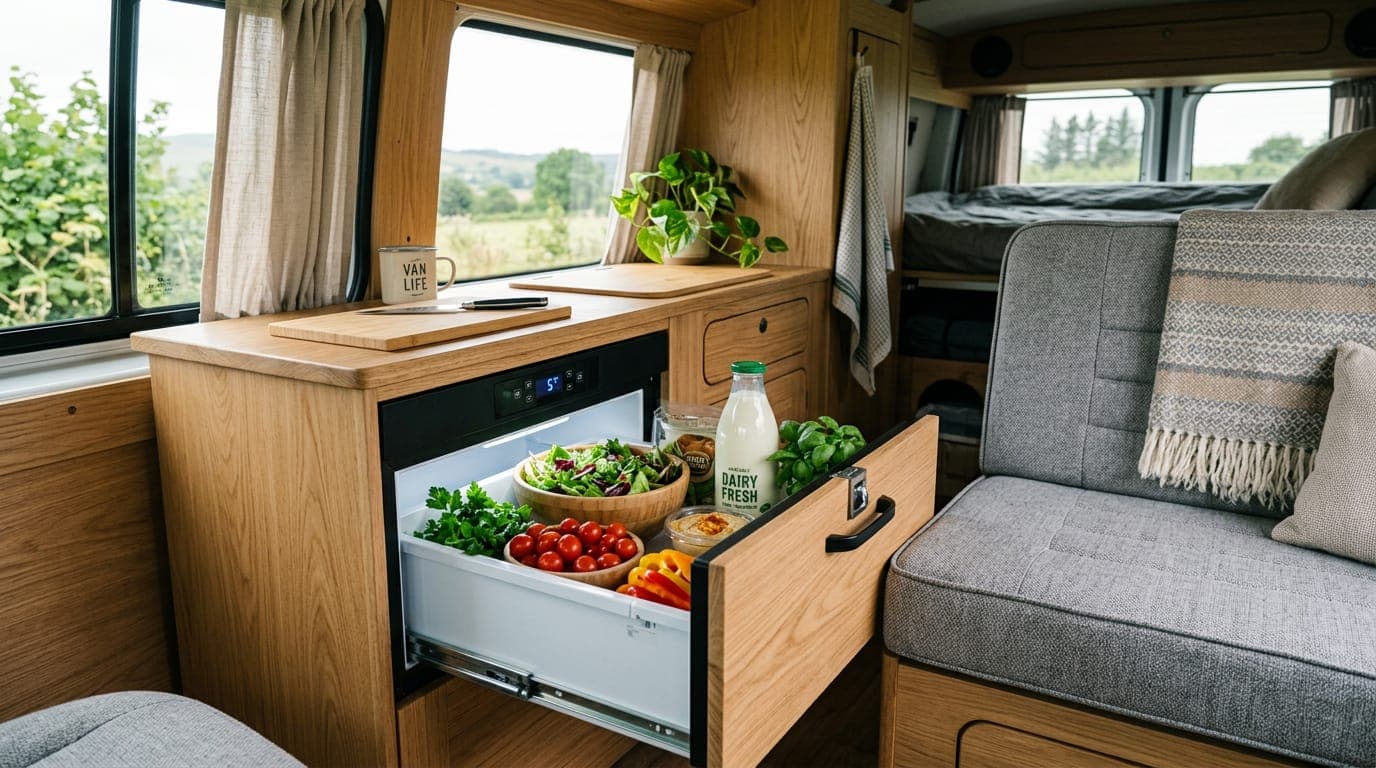
Runs from your battery
12V compressor fridge
Strong, simple cooling powered by your leisure battery.
Pros
Cools well in hot weather. Holds its temperature even on warm summer days in Europe.
Works at any angle. No need to find a level pitch before the fridge will work properly.
No gas to manage. Simple 12V running, so there is nothing to vent, light or refill.
Works while you drive. Keeps running on the move, with the battery recharged as you travel.
Cons
Daily battery demand. It runs day and night, so it is usually the biggest everyday load on your battery.
Can be audible. You may hear the compressor cycle at night, especially if it sits near the bed.
Needs a charging plan. Longer off-grid stays rely on solar, driving or hook-up to keep the battery topped up.
Needs airflow. It must be able to shed heat, so ventilation around the unit still matters.
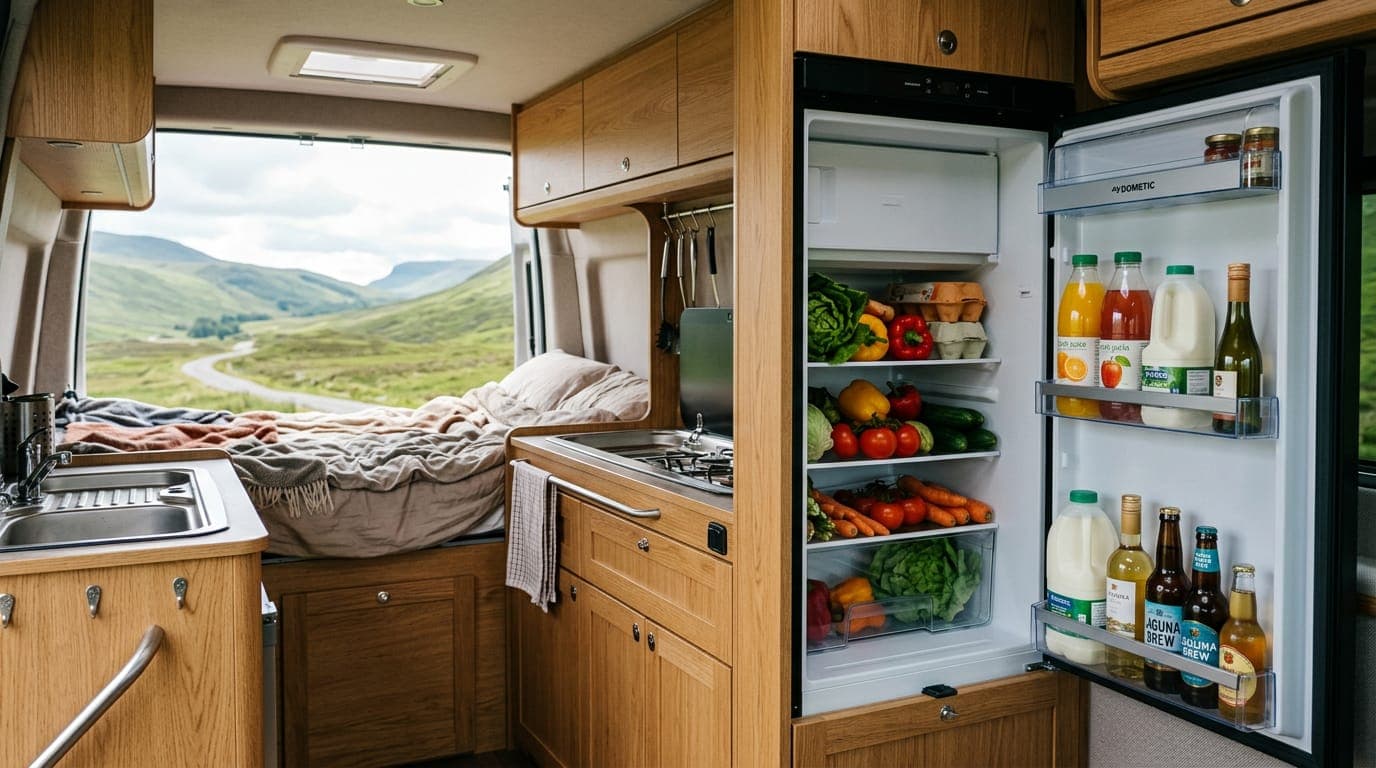
Gas, mains and 12V
Three-way absorption fridge
Silent cooling that can run on gas when you are parked up.
Pros
Spares your battery. Runs on gas when parked, leaving your leisure battery for everything else.
Practically silent. No compressor, so nothing to hear when you are trying to sleep.
Mains on hook-up. Switch to electric hook-up on campsites and save your gas.
Flexible power. Three ways to run it gives you options wherever you stay.
Cons
Careful installation. Needs external venting and must be fitted to the manufacturer’s instructions.
Needs to be level. It must be reasonably level to work properly, which matters on sloping pitches.
Struggles in the heat. Less effective in high temperatures, just when you need it most.
Weak on 12V. Usually only practical on 12V while driving, as it draws a lot of current.
Whichever you choose
- Choose a size around how often you shop, not the biggest fridge that will fit.
- Check the fridge door or lid can open fully with the bed made and the aisle in use.
- Use a fridge thermometer and aim for 0–5°C to keep food safely chilled.
Portable compressor fridges and cool boxes are another option. Thermoelectric cool boxes only cool relative to the surrounding temperature, so check their limits carefully.
Watch or listen
Campervan Fridges Explained: which type, what size and how much power you really need.
My experience
What living with a campervan fridge is actually like, from the weekly shop to warm summer nights.
Read my experience