
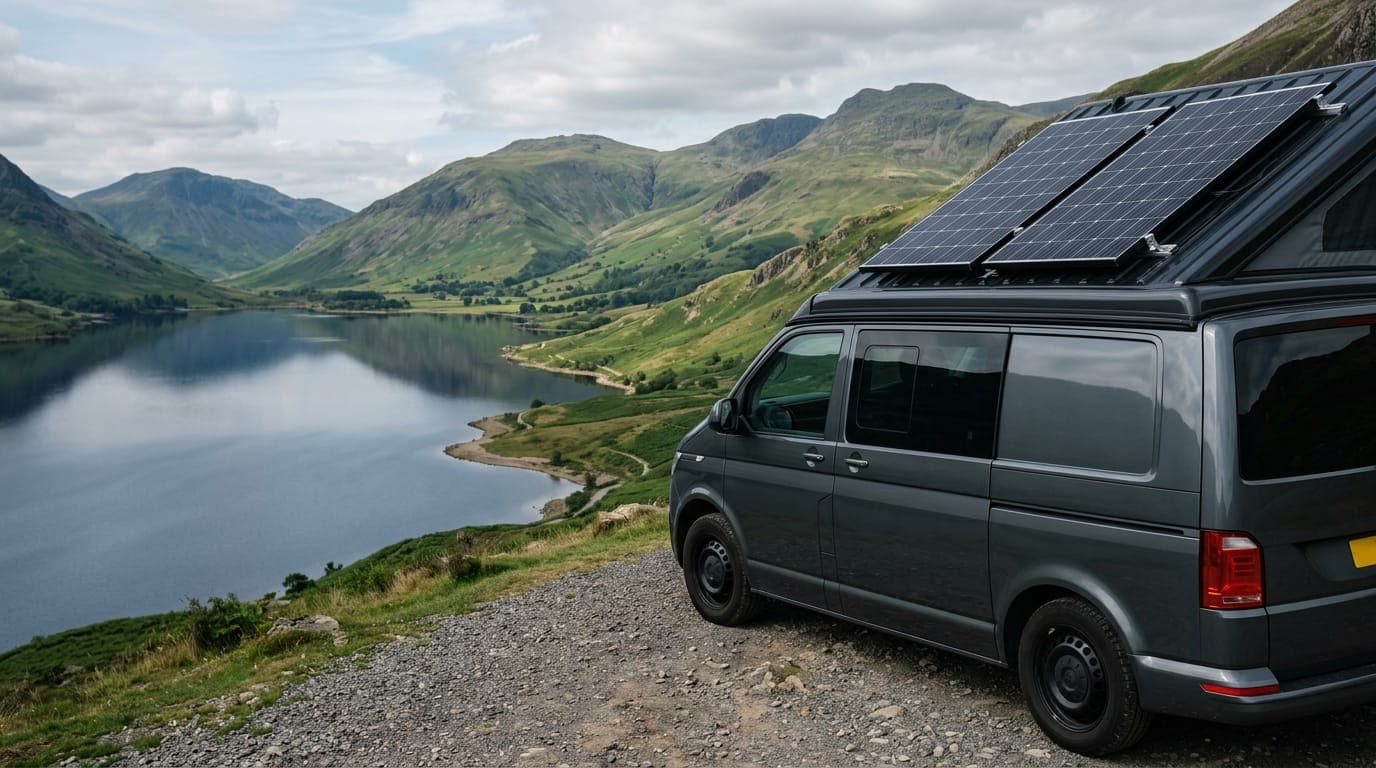
Campervan Solar: The Pros and Cons
Roof-mounted and portable solar both help keep your leisure battery topped up, but in different ways. Here is what you gain and what you give up with each.
Fixed or flexible?
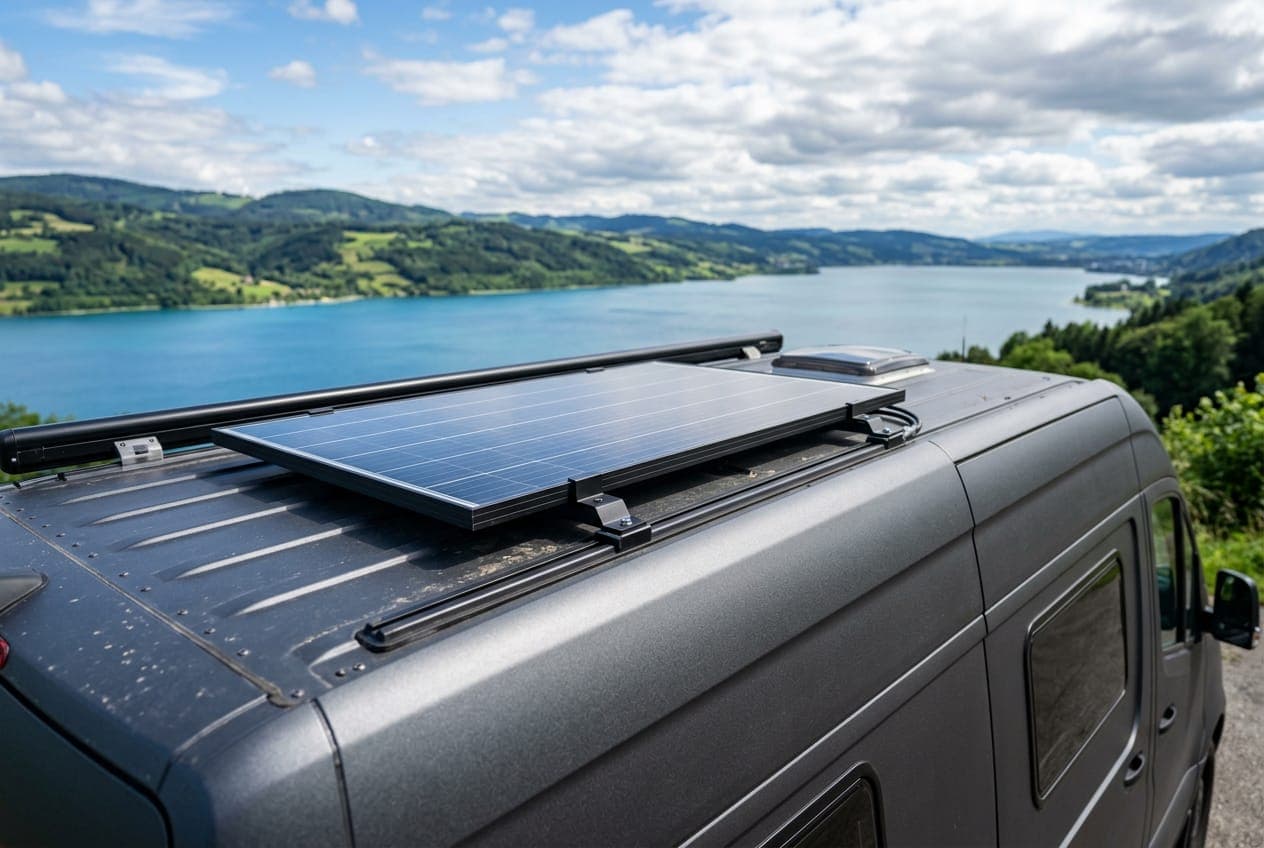
Fixed to the van
Roof-mounted solar
Always with you, charging whenever conditions allow.
Pros
Works without thinking. It charges whenever there is daylight, whether you are parked, driving or away from the van.
Nothing to set up. No unpacking, positioning or packing away at the end of a trip.
Secure. Fixed in place, so there is nothing to leave outside or worry about overnight.
Keeps the battery healthy. Gently tops up the leisure battery between trips while the van is parked at home.
Cons
Only works where you park. Park in shade to keep the van cool and the panel produces far less.
Fixed angle. A flat panel cannot be tilted towards low winter sun, so output drops further.
Uses roof space. It can compete with a pop-top, roof bars, vents or a roof box, and adds height.
Cost and fitting. Adds cost, a little weight and another roof fitting and seal to check.
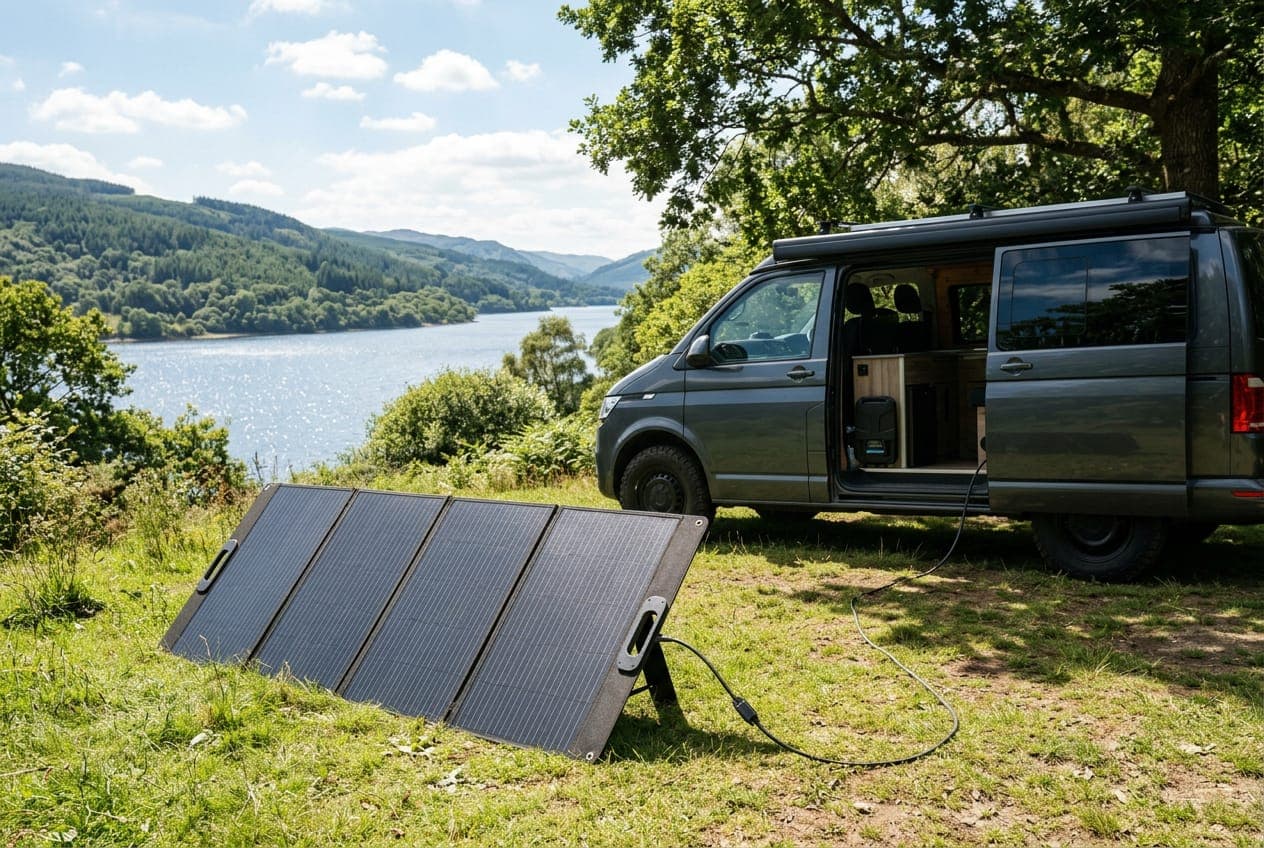
Set up when parked
Portable solar
Put it in the sunshine while the van stays in the shade.
Pros
Follow the sun. Move and angle the panel through the day to catch the best light.
Park in the shade. Keep the van cool under trees while the panel sits out in the open.
No roof changes. Nothing to drill or fit, which suits pop-tops and vans with busy roofs.
Flexible. Easy to take with you, lend out or move to another van later.
Cons
Only charges when it is out. No charging while you drive or when the van is left at home.
Setting up and packing away. Another job at every stop, and a wet panel to dry before storing.
Security. It is easy to steal, so it is less suited to leaving out unattended.
Storage and cables. Needs space to carry and a cable run that will not trip anyone up.
Whichever you choose
- Work out your daily power use first, then size the solar to help refill your battery.
- Make sure your battery can cover a cloudy day or two, because solar output can drop sharply.
- Use a suitable charge controller and have the installation checked by someone qualified.
Solar output varies with weather, shade, season and panel angle. Some vans use both: a roof panel for everyday top-ups and a portable panel for longer stays in the shade.
Watch or listen
Watch the solar discussion or listen to the podcast episode.
Solar episode — coming soon
My experience
What travelling with solar is actually like, on bright summer days and grey, short ones.
Read my experience