
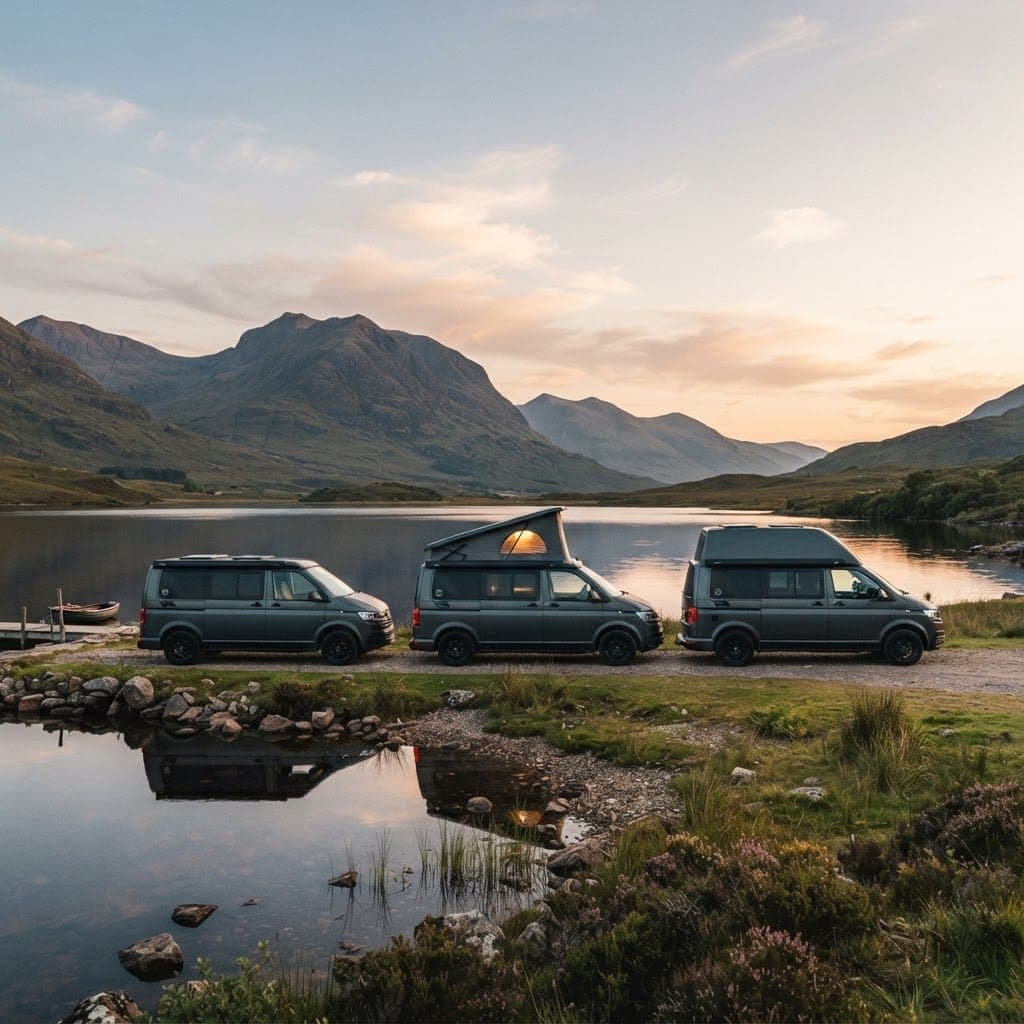
Pop-Top vs High Roof vs Standard Roof: The Pros and Cons
Each roof trades headroom against height, cost and comfort in a different way. Here is what you gain and what you give up with each.
Headroom when you need it?
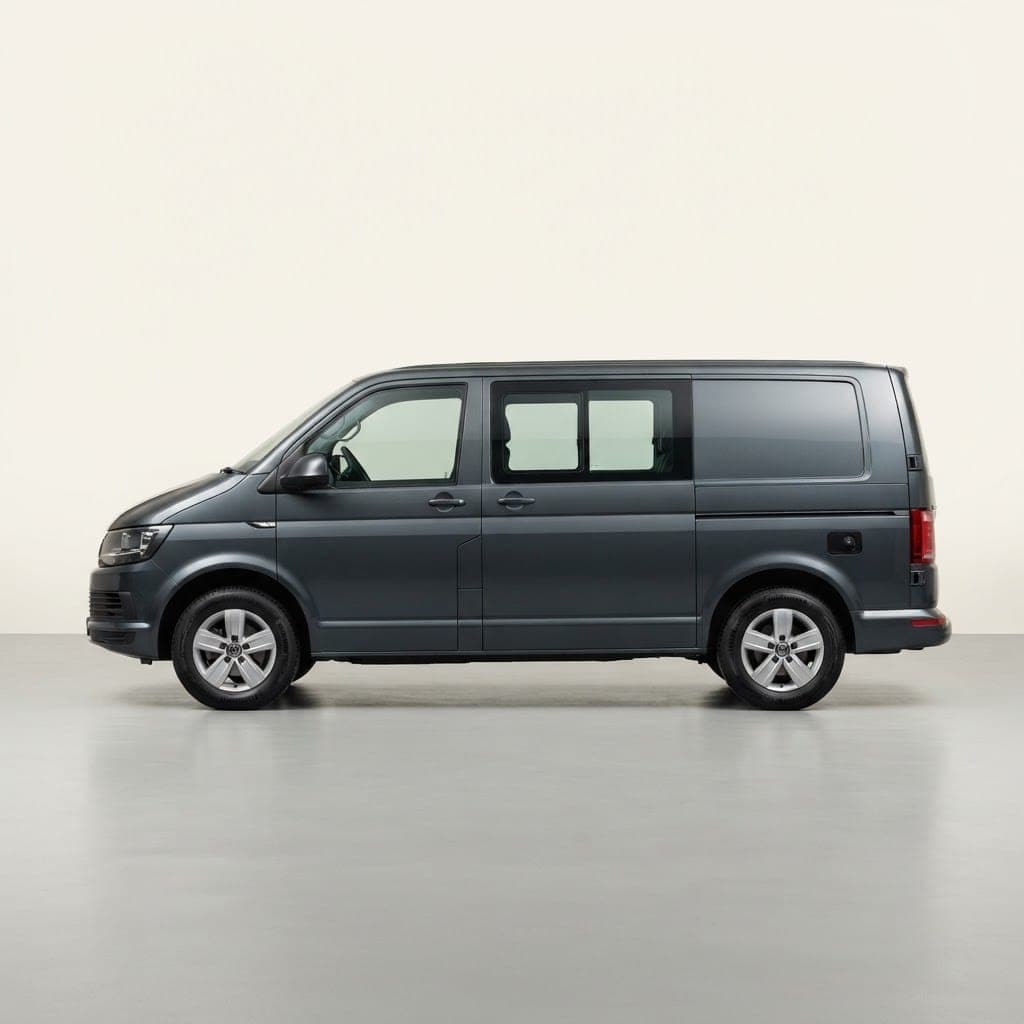
Around 2.0m overall
Standard roof
Simple, low and easy to live with.
Pros
Lowest cost. No roof conversion to pay for, and nothing extra to service or repair later.
Easiest to park. Fits most height-restricted car parks and multi-storeys, and is usually fine for home garages.
Quiet and well insulated. A solid metal roof keeps wind noise down and holds heat better than canvas.
Nothing to set up. Arrive, park and you are ready. There is no roof to raise, dry or check before you drive.
Cons
No standing room. You sit, lie or crouch inside, which makes cooking and getting dressed harder.
Fewer sleeping places. Usually only the main bed, so it suits two people better than a family.
Can feel cramped. On a wet day spent inside, the low ceiling makes the van feel smaller.
Less room overhead. There is less space for high storage cupboards and roof-level lighting.
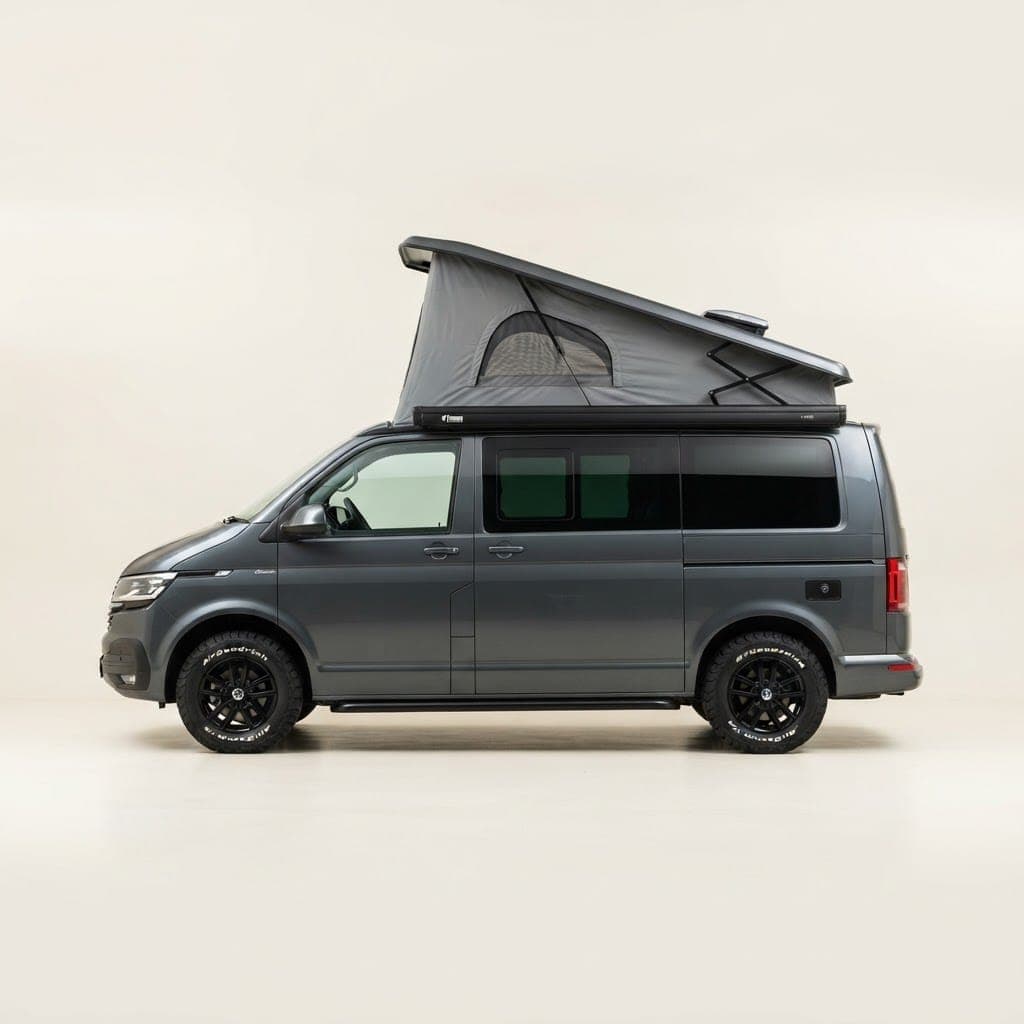
Around 2.0m closed
Pop-top roof
Standing room at camp, low profile on the road.
Pros
Standing room when parked. Raise the roof and you can stand to cook, change and move around in comfort.
Possible extra bed. Many pop-tops include a roof bed, which can add sleeping space for one or two.
Still a normal height. Closed, it is close to a standard van, so most car parks and drives stay usable.
Light and airy. Canvas sides with windows or mesh let light and fresh air in on warm evenings.
Cons
Less insulated. Canvas sides lose heat and let more noise in on cold, windy or wet nights.
Weather dependent. Strong winds may mean keeping it down, and wet canvas needs drying out later.
More to maintain. Seals, struts, canvas and mechanisms all need regular checks and care.
Adds cost and weight. The conversion adds to the price and puts weight high up on the vehicle.
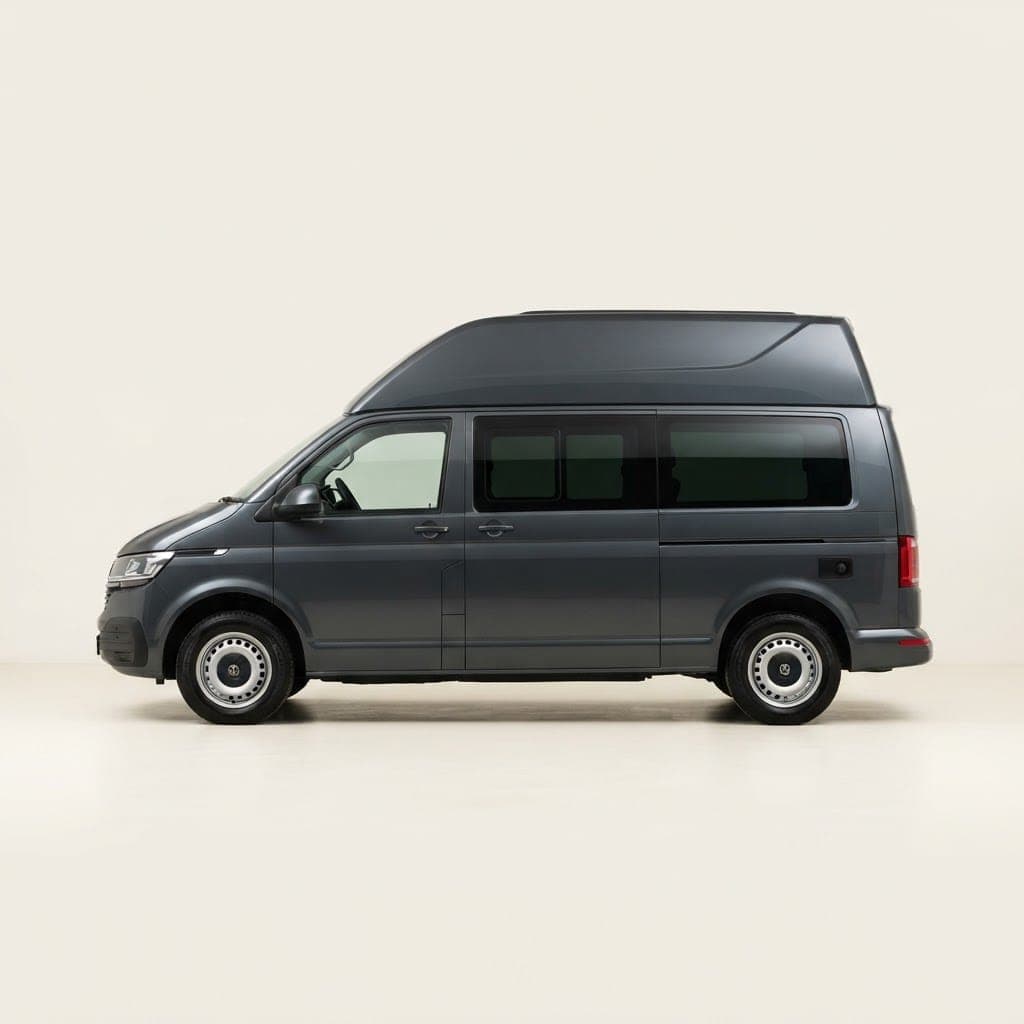
Around 2.4–2.7m overall
High roof
Permanent headroom, whatever the weather.
Pros
Always standing room. You can stand up at any time, even on a quick lunch stop or a rainy day.
Better in all weather. Solid sides insulate well and do not need drying or packing away.
More storage. Extra height leaves room for overhead cupboards and taller storage.
Good for longer trips. Living in the van for weeks is more comfortable with permanent space overhead.
Cons
Height restrictions. Many car parks, drive-throughs and some ferries or garages are off limits.
Harder as a daily car. Towns, shopping and short errands need more planning.
More wind and fuel. A taller van catches more wind, which you can feel and may notice in fuel use.
Usually the most expensive. A fixed high roof is often the largest conversion cost of the three.
Whichever you choose
- Measure your garage, driveway and any car parks you use often before deciding.
- Check the exact overall height of the van you are buying, including roof bars, solar panels or a roof box.
- Try sitting, standing and making the bed in each type of van before you buy, rather than relying on the spec sheet.
Heights are approximate for a VW Transporter-sized van and vary by model, conversion and anything fitted to the roof. Always check the figure for the exact vehicle.
Hear the full discussion
We talk through pop-tops, high roofs and standard roofs on Campervan Considered.
My experience
Why we chose a pop-top, what it is like to live with, and what I would think about before buying one.
Read my experience